
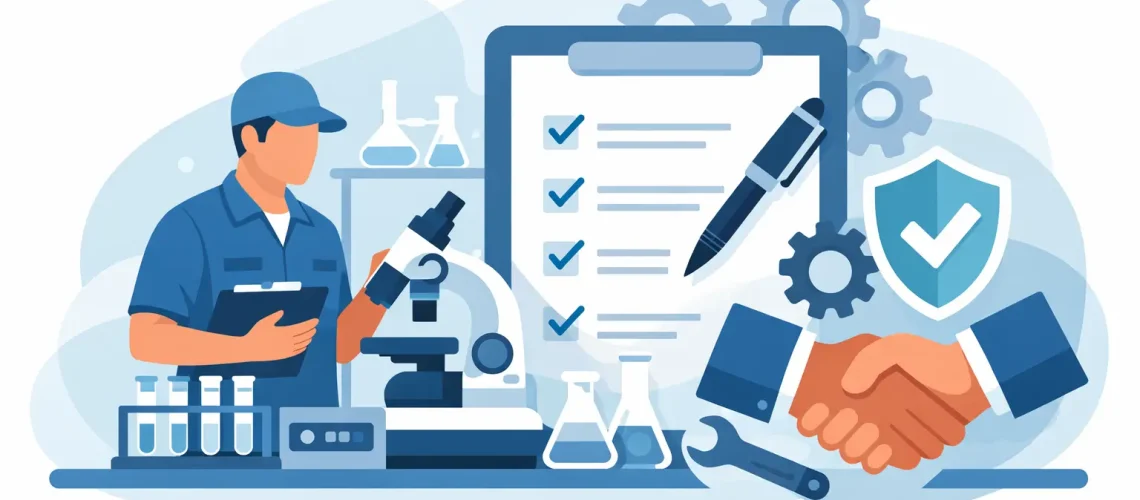
When a PCR system fails mid-run or a centrifuge drifts out of tolerance during a critical study, the issue is rarely just the instrument. It becomes a scheduling problem, a compliance problem, and often a cost problem. That is why a laboratory equipment maintenance contract is not a routine purchasing item. It is an operational control point that affects uptime, data quality, and the pace of research or production.
For research institutions, hospitals, and industrial laboratories, maintenance agreements are often evaluated too narrowly. The initial question tends to be price. The better question is whether the contract supports the way the laboratory actually works – including instrument criticality, service response expectations, calibration requirements, and the real cost of interruption.
What a laboratory equipment maintenance contract actually does
At its core, a laboratory equipment maintenance contract defines how a service provider will keep an instrument or group of instruments performing within expected specifications over time. That usually includes preventive maintenance, inspection, functional checks, replacement of wear components, and in some cases calibration, repair labor, software support, and parts coverage.
The value of the contract depends on more than the checklist. In a high-throughput environment, the difference between next-business-day service and a five-day response window can determine whether a lab meets a project milestone. In regulated settings, service documentation and traceability may matter as much as the repair itself. In research labs with mixed fleets, flexibility across brands and models can be more important than a highly standardized plan.
A strong contract creates predictability. It gives the laboratory a defined service path before a failure happens, rather than forcing the team into reactive troubleshooting, emergency approvals, and ad hoc vendor sourcing.
Why contract structure matters more than many teams expect
Two maintenance contracts can appear similar on paper and still perform very differently in practice. One may include preventive visits but exclude common replacement parts. Another may offer broad parts coverage but place calibration under a separate scope. Some agreements are designed around OEM workflows, while others are built for multi-vendor environments where laboratories need one partner across several equipment categories.
This is where procurement, lab management, and end users need to align. The contract should reflect how the equipment contributes to operations. A backup freezer in a low-risk setting does not need the same service profile as an analytical balance used in validated workflows or a biosafety cabinet supporting daily sample handling.
A useful way to think about contract design is risk concentration. Which instruments would cause the most disruption if unavailable? Which ones influence reportable results, patient-facing workflows, or expensive sample integrity? Those assets typically justify a more comprehensive service model.
Key elements to review in a laboratory equipment maintenance contract
The most effective agreements are specific. General language may look acceptable during review, but vague service definitions often create delays and billing disputes later.
Start with scope. The contract should identify the covered instruments by model, serial number, location, and service level. If the laboratory relocates equipment between departments or sites, that should be addressed in advance. Multi-site organizations often overlook this point until a service call is rejected because the asset is no longer in its originally listed room or facility.
Preventive maintenance frequency should be stated clearly. Quarterly, semiannual, or annual service intervals depend on the instrument type, usage intensity, manufacturer recommendations, and quality requirements. A freezer, microscope, autoclave, spectrophotometer, and thermal cycler do not need the same service schedule.
Response time is another major point. Some contracts promise attendance within a defined number of business hours. Others only commit to remote triage first, with on-site support scheduled later. Neither model is automatically wrong. It depends on how disruptive delay would be and whether remote diagnosis is technically useful for that equipment class.
Parts coverage deserves close attention. Laboratories often assume that a maintenance agreement includes replacement parts, but many contracts only cover labor for preventive visits and standard repairs. Consumables, wear items, specialized sensors, lamps, gaskets, pumps, filters, and boards may be excluded or capped. If an instrument is aging, this section becomes even more important because failure rates and parts scarcity usually increase together.
Documentation should also be reviewed with care. Service reports, calibration certificates, asset history, and traceable maintenance records are not administrative extras. They support audits, quality systems, and internal planning. A contract that includes reliable documentation can reduce effort across the lab, especially where accreditation or internal compliance controls are involved.
Choosing between preventive, comprehensive, and customized service
Not every lab needs the same contract model. Preventive maintenance agreements are often appropriate for stable equipment fleets where the instruments are relatively reliable and the organization can tolerate occasional repair charges. This option controls routine servicing costs without committing to a higher annual fee.
Comprehensive contracts are better suited to mission-critical equipment, regulated workflows, or environments where downtime creates significant operational loss. These agreements generally bundle preventive maintenance with repair labor and broader parts coverage. The annual cost is higher, but financial exposure becomes more predictable.
Customized service plans are increasingly relevant for laboratories operating across multiple disciplines. A single organization may have biomedical analyzers, molecular biology systems, cold storage, imaging equipment, and custom-built setups. In that setting, a one-size-fits-all contract often creates gaps. Tailored coverage allows service levels to match asset criticality instead of forcing every instrument into the same commercial structure.
That tailored approach is particularly valuable when a provider understands both standard equipment support and the wider technical environment around the instrument – including calibration needs, custom adapters, refurbishment options, replacement part strategy, and workflow dependencies.
The hidden costs of a weak maintenance agreement
A low-cost contract can become expensive very quickly if exclusions are not aligned with laboratory reality. Downtime is the most obvious cost, but it is rarely the only one. Failed runs, delayed releases, overtime labor, emergency outsourcing, sample loss, and rescheduled studies all carry downstream impact.
There is also a planning cost. Laboratories that operate without a dependable service framework often end up with fragmented maintenance history, inconsistent vendor response, and poor visibility into when replacement decisions should be made. That uncertainty affects budgeting and capital planning just as much as it affects daily operations.
Another common issue is service misalignment with aging assets. Older instruments may still be functionally valuable, but they need a realistic support strategy. If parts are becoming obsolete or field support is narrowing, the maintenance contract should account for that. Sometimes the right answer is continued service with defined limitations. Sometimes it is refurbishment, staged replacement, or a hybrid strategy that keeps critical capacity online while reducing long-term risk.
How to evaluate a service partner
Technical capability matters, but so does service model fit. A good provider should be able to explain not only what is covered, but why the contract is structured that way for your environment. That means discussing instrument criticality, maintenance intervals, common failure points, documentation expectations, and turnaround priorities in practical terms.
Ask how the provider handles mixed-brand fleets, legacy systems, emergency calls, and parts sourcing. Ask whether they can support calibration, refurbishment, relocation, or performance verification if your workflow requires it. Laboratories rarely operate in neat silos, so the service relationship should reflect the broader operating reality.
This is where an integrated scientific solutions partner can create a real advantage. When equipment support is connected to broader technical services, laboratories gain more than repairs. They gain a partner with visibility across instrument performance, application needs, and infrastructure constraints. For organizations balancing research delivery with operational discipline, that wider view can reduce friction across the entire asset lifecycle.
When to renew, renegotiate, or replace the contract
A maintenance agreement should not simply auto-renew because nothing has failed recently. The right review point is usually tied to changes in instrument utilization, regulatory requirements, fleet age, or business continuity risk.
If service calls are increasing, response times are slipping, or excluded parts are driving repeated unplanned spending, renegotiation is warranted. If the lab has expanded into new methods or added higher-value workflows, the original contract may no longer be adequate. And if the provider cannot support older assets effectively, the conversation may need to shift from maintenance terms to replacement planning.
Strong contracts evolve with the laboratory. They support current operations while giving decision-makers better visibility into future service demand, refurbishment opportunities, and capital needs.
A laboratory equipment maintenance contract should make the lab more predictable, not more complicated. The best agreements do not just promise service visits. They protect uptime, support quality, and give scientific teams the confidence to keep moving when the schedule is tight and the work matters most.